
Social Conflict: The Lomans vs the Neighborhood
Death of a SalesmanThe conflict between the Loman family and the encroaching urban environment, symbolizing the loss of the pastoral dream and the pressure of modern society.
increasing Bearing strength in each event
 decreasing
Bearing strength in each eventdecreasingThe House Surrounded
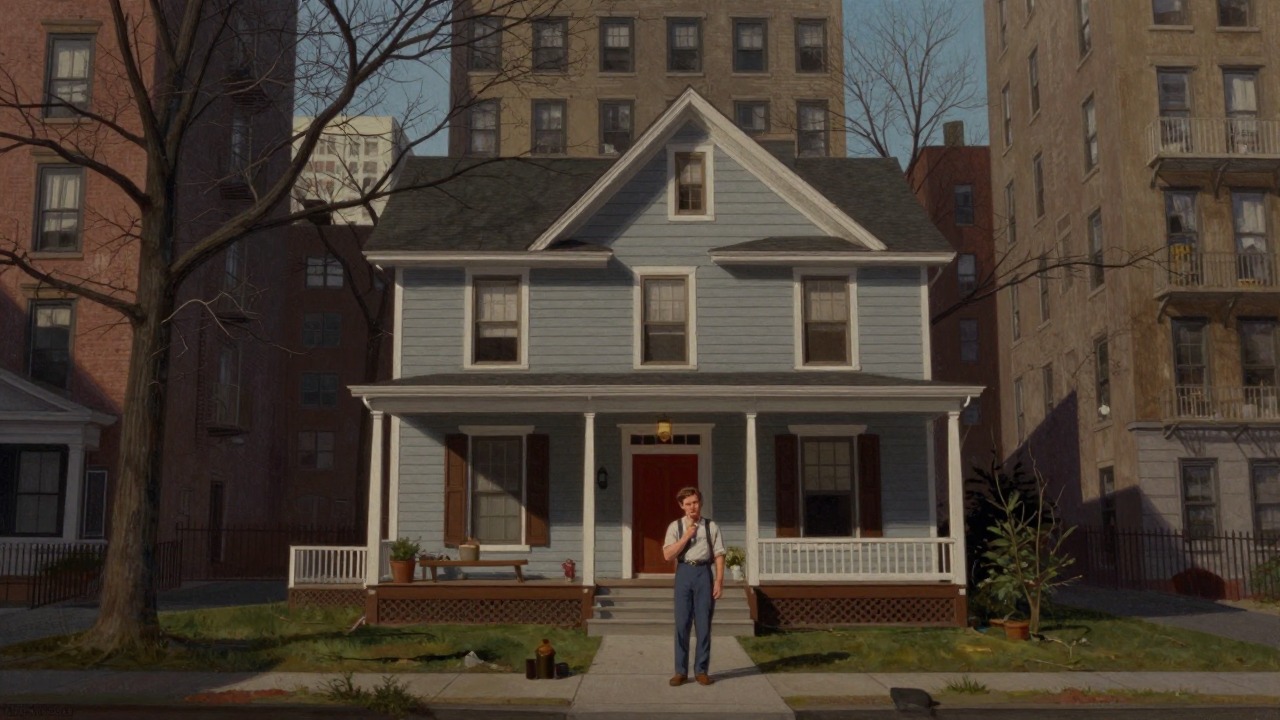
A Home in the Shadows
The Apartment Buildings
The Loman house is now hemmed in by towering apartment houses. The trees that once shaded it are dead or dying. The stage set reflects the loss of open space and the pressure of the city.
Willy's Lament
Willy complains about the lack of light, the stink from the apartment house, the street lined with cars. He remembers when the neighborhood was open country. The change is a source of his despair.
The Symbol of Entrapment
The surrounding buildings are a visual metaphor for the forces closing in on Willy. He feels boxed in, unable to breathe. The social conflict is between the individual and the urban environment.
The Dead Garden
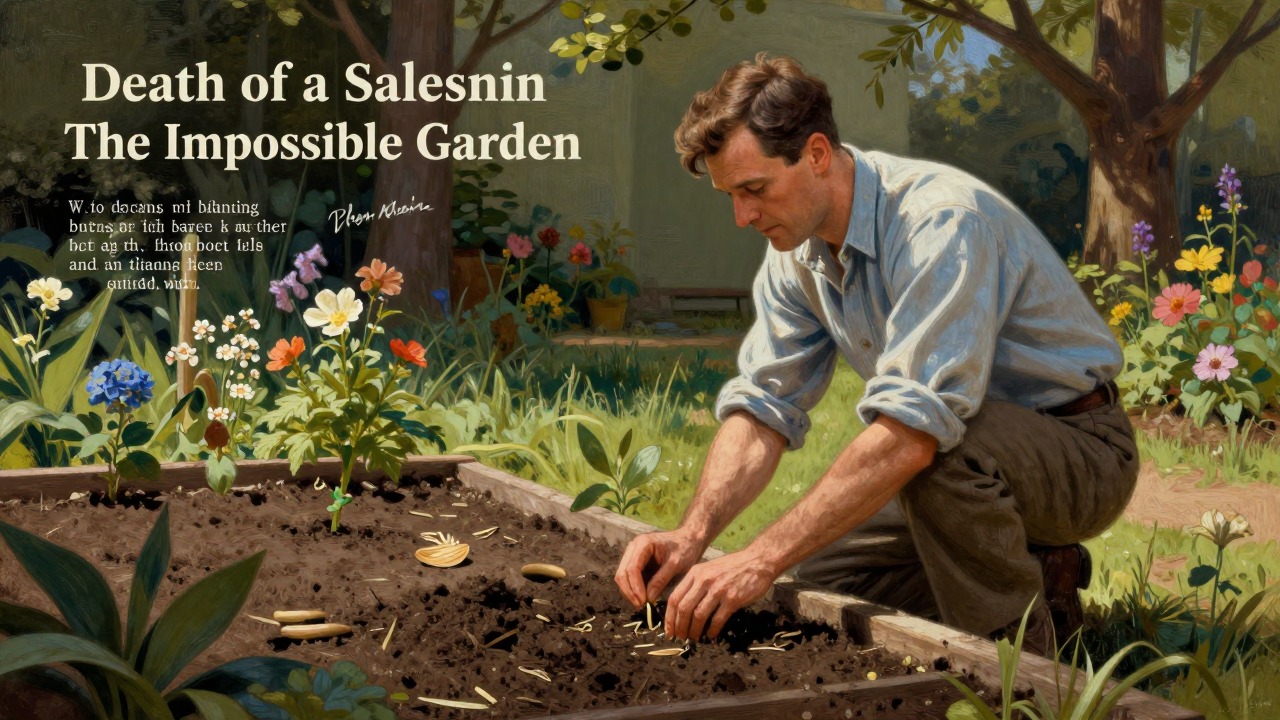
The Loss of Nature
The Impossible Garden
Willy dreams of planting a garden, but the soil is barren, the sun blocked. The seeds he buys at the end are a futile gesture. Nature has been defeated by concrete.
The Pastoral Memory
Willy's memories of the past are filled with trees, flowers, and open air. He recalls the lilac and wisteria, the elm trees where he hung a swing. The past is a lost paradise.
The Critique of Progress
The play critiques the unchecked growth of cities and the loss of connection to the land. Willy's desire for a garden is a longing for a simpler, more natural life that no longer exists.
The present
Throughout the play
